
Use agentic recovery to get back to business as usual after your AI applications go down, whether because of an agent or good ol’ fashioned human mistakes.
Agents now have access to production and they don’t always use it well. One bad prompt or loose permission and a table’s gone or a config’s rewritten.
Meanwhile your own AI apps depend on critical cloud resources like vector stores, embeddings, and API keys most backup plans never mapped.
And your team is still expected to protect more apps with the same headcount. Traditional tools tackle this by only going halfway: restoring data, but without recovering the application.
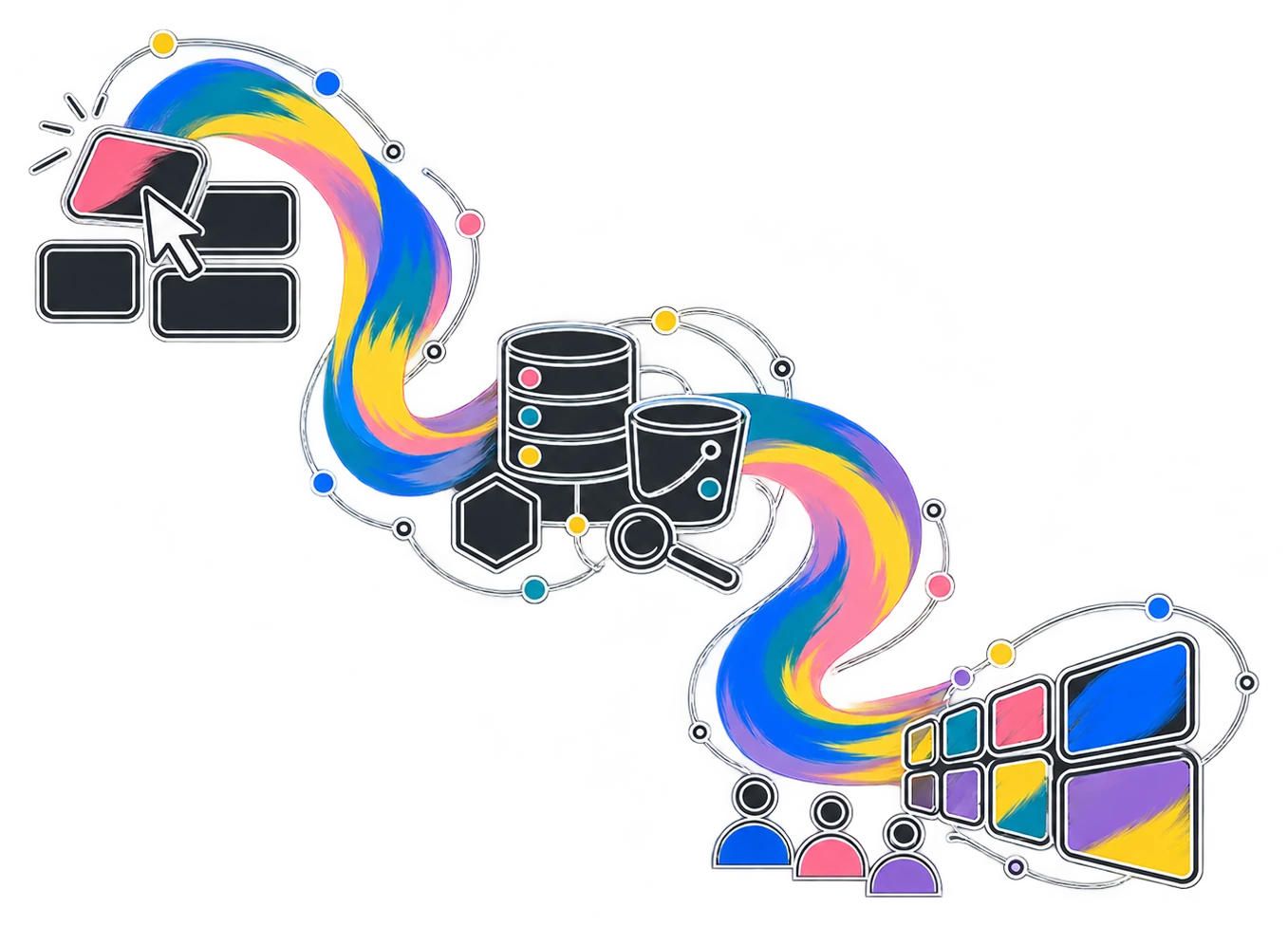
Three ways Dreeze has you covered, whichever side of the outage AI is on
Doesn’t matter if an agent went rogue or is just overpermissioned, when it drops a table or rewrites your Terraform, Dreeze rolls the whole app back to its last good state, data and config together. Anomaly checks flag the mass deletes and rewrites agents leave behind. Dreeze doesn’t stop the agent, but it makes the damage recoverable.
AI apps are a lot like your other apps and need the same protection. Dreeze maps them as one complete AI app stack, backed up together, recovered together. Picture your pgvector on managed Postgres, the object storage holding your context, the K8s clusters running inference, and the API keys your agents use all brought back as one unified whole without manual reassembly.

Whether autonomous dependency mapping or AI-assisted recovery tests, Dreeze AI can reduce your workload and scale your team without adding headcount. Tunable and safely guardrailed, we don’t hallucinate apps or act without your oversight. Prefer headless? Dreeze MCP lets your own agents check status, dig into a failed backup, or kick off a test.
No, and we won’t pretend otherwise. That’s a job for guardrails, permissions, and the security stack you’re already invested in. But Dreeze makes sure that when something gets through, you can bring the whole app back.
To any recovery point in your isolated, immutable vault. Pick a point in time, see which copy each resource will use, then automatically recover.
Not necessarily. You can recover one app instead of everything, and on PostgreSQL you can restore individual tables.
Yes, when they run on managed PostgreSQL with pgvector, since Dreeze backs up the database itself. Check with us for other vector stores.
Yes, through Dreeze MCP. Admins choose whether assistants get no access, read-only, or read-write, and every request carries the user’s own identity and role.
No. The Dreeze agent proposes app groupings and explains them. You can edit anything it proposes, and membership always comes from the dependency graph. Dreeze always pairs AI with deterministic code to avoid recovery slop or hallucinated backup plans.
A read-only scan of one account shows every app, its dependencies, and what a recovery would miss today.